
1. Bank of Finland: Finnish Economy Maintains Its Positive Momentum
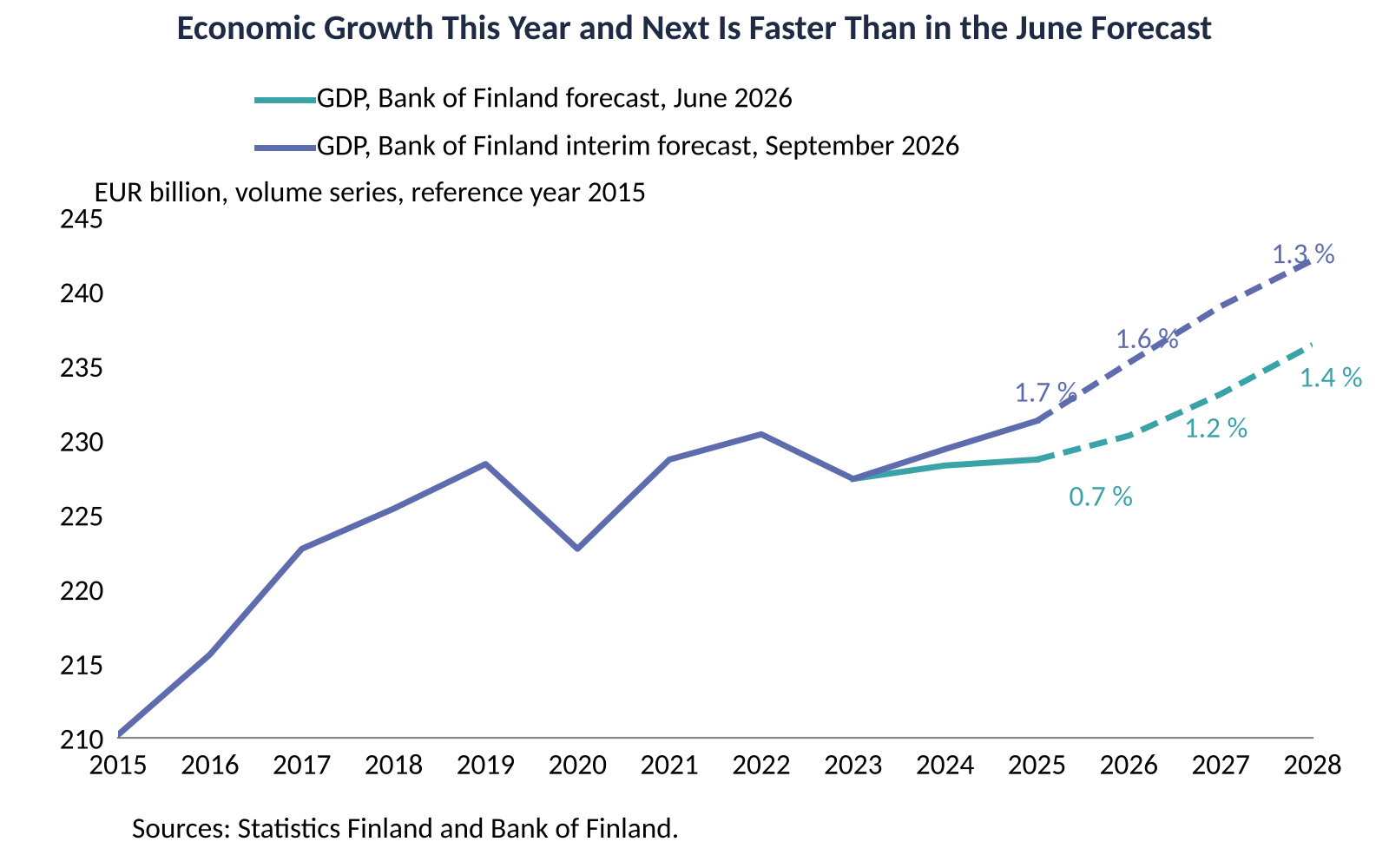
The picture of cyclical developments given by the Bank of Finland’s interim forecast is more positive than in the June forecast. Finland’s economic growth has picked up and become more broad-based this year. Of the demand components, exports in particular have accelerated growth. Private productive investment has also increased, and private consumption has recovered slightly from last year’s lows.
Finland’s GDP is forecast to grow faster this year and next year than was estimated in June. According to the forecast, GDP will grow by 1.7% in 2026 and by 1.6% in 2027. In 2028, growth will slow to 1.3%.
Suomen talouden hyvä vire jatkuu | Suomen Pankki
2. Research Institute of Finnish Economy: Economic Outlook Autumn 2026: Finland’s Growth Accelerates, but There Is Room for Improvement
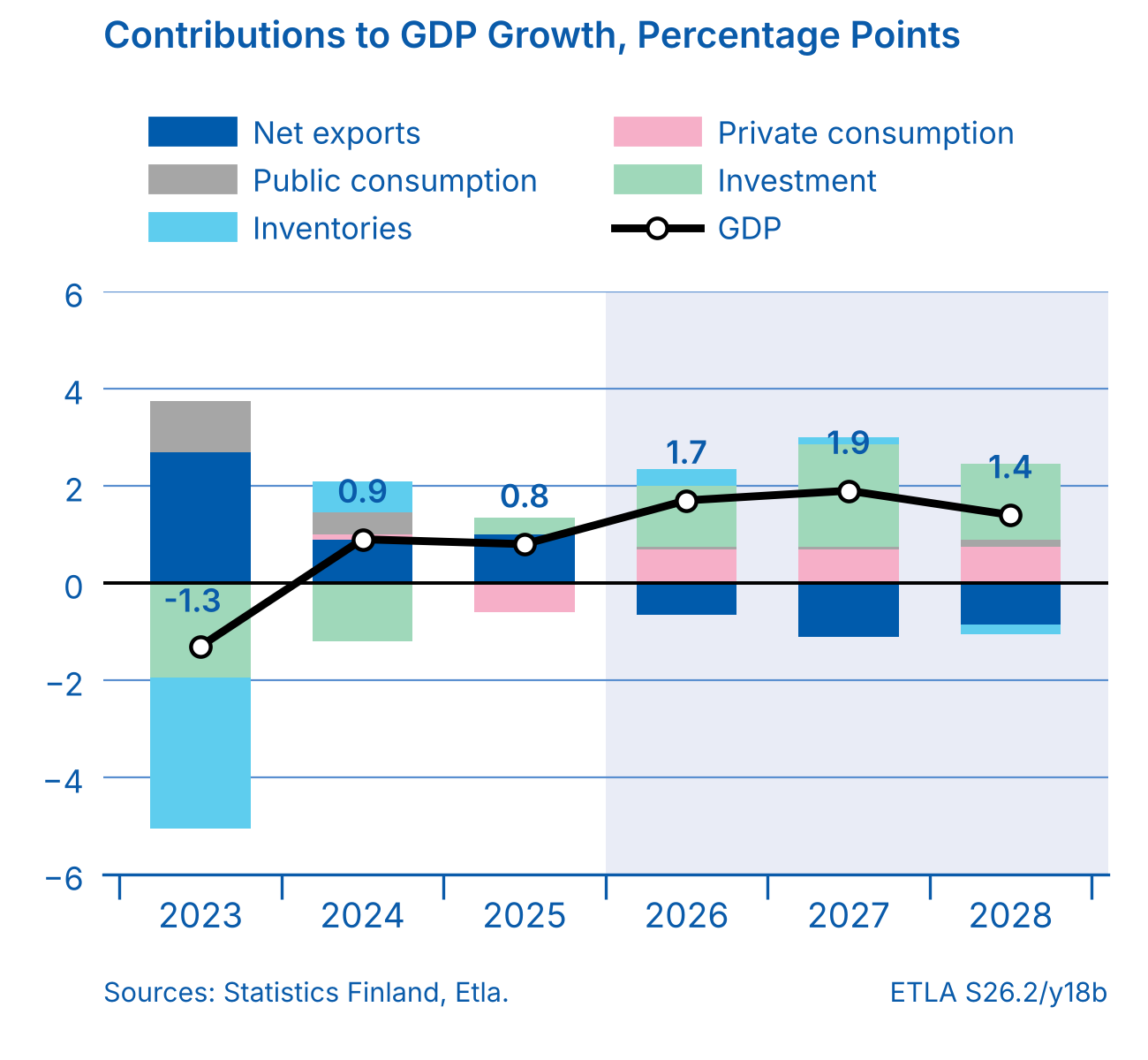
Economic growth will strengthen to 1.7% this year, driven by exports, investment and private consumption. Next year, growth will accelerate to 1.9%. The current year has been colored by the crisis in the Middle East, which has seen many twists and turns. At the time of writing, the crisis appears to have turned into a conflict with no resolution in sight. Despite the turbulence in world politics, the Finnish economy was growing briskly at the beginning of the year. This time, the Finnish economy would appear to withstand the blow caused by the Middle East crisis, unless the war escalates again.
After the shock earlier in the year, consumer confidence in the economy has improved, and together with strengthening purchasing power, it is supporting private consumption. However, the growth in consumption is being weighed down by rising interest rates and living costs. Private consumption is growing at its fastest pace since 2021, but households’ substantial savings create potential for even faster growth in consumption.
Suhdanne Syksy 2026 | Elinkeinoelämän tutkimuslaitos
3. Labore: How Far Will It Fly? — The Angle Is Promising and There Is Power Behind It
Finland’s economic growth has strengthened in the early part of the year, but the recovery is still progressing unevenly. Goods exports have grown rapidly and productive investment has increased. Private consumption is also showing a turn for the better after a long sluggish period.
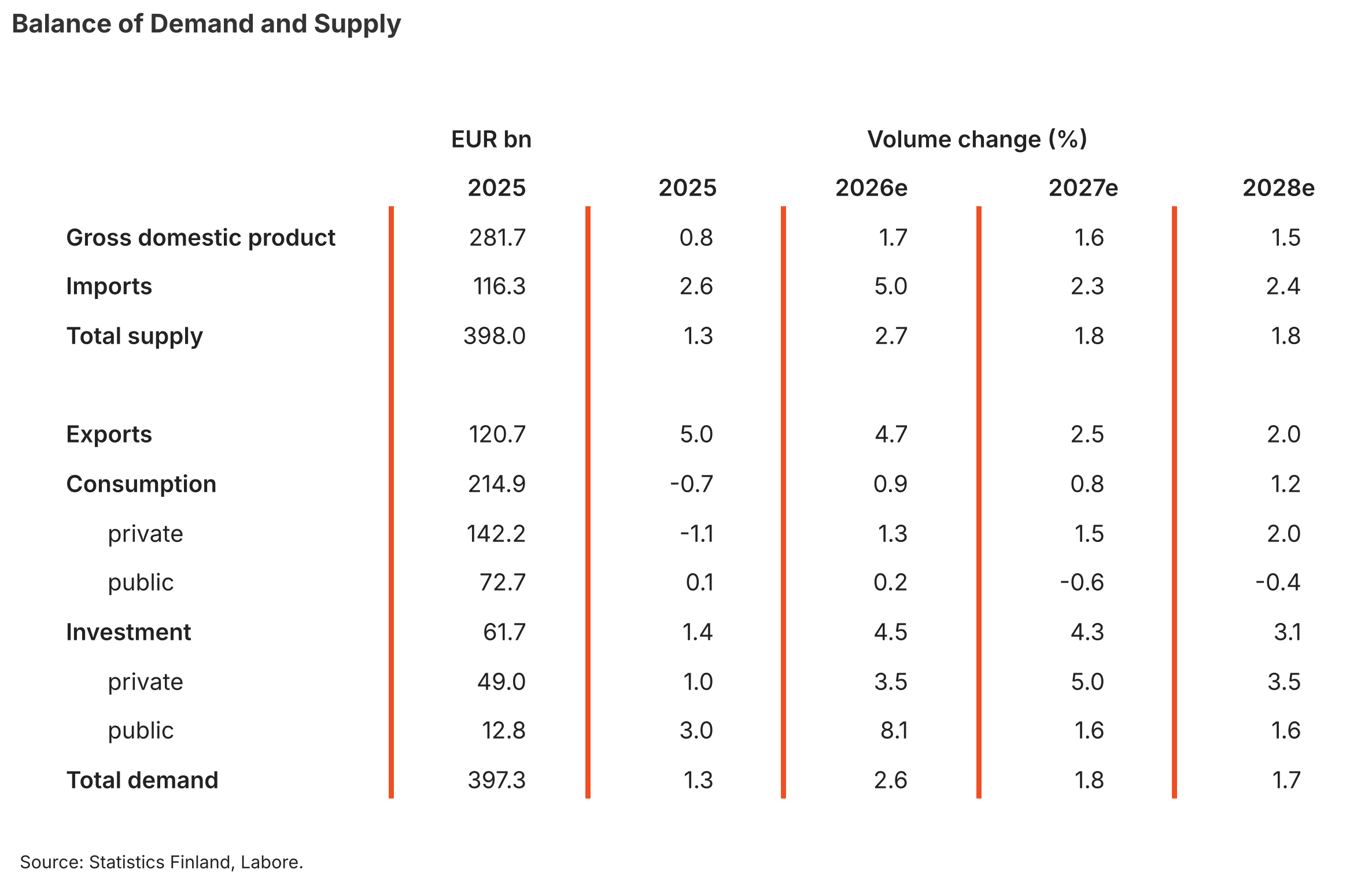
Finland’s export outlook is relatively favorable. The improving cyclical situation of key trading partners and the growth in European defense investment are supporting demand for the products of the engineering industry. Ship deliveries and pharmaceutical exports are also sustaining export growth. Demand for forest industry products, by contrast, is weak, and services exports have developed sluggishly. We forecast exports to grow by 4.7% this year, by 2.5% in 2027 and by 2.0% in 2028.
Investment growth will continue, but the outlooks for residential construction and productive investment differ clearly from each other. Data center projects are increasing both construction and IT purchases, and defense procurement is increasing public investment. In our forecast, investment will grow by 4.4% this year, by 4.3% in 2027 and by 3.1% in 2028.
Kauasko kaari kantaa? – Kulma on lupaava ja takana on voimaa | Työn ja talouden tutkimus LABORE
4. Federation of Finnish Enterprises: SME Barometer 2/2026
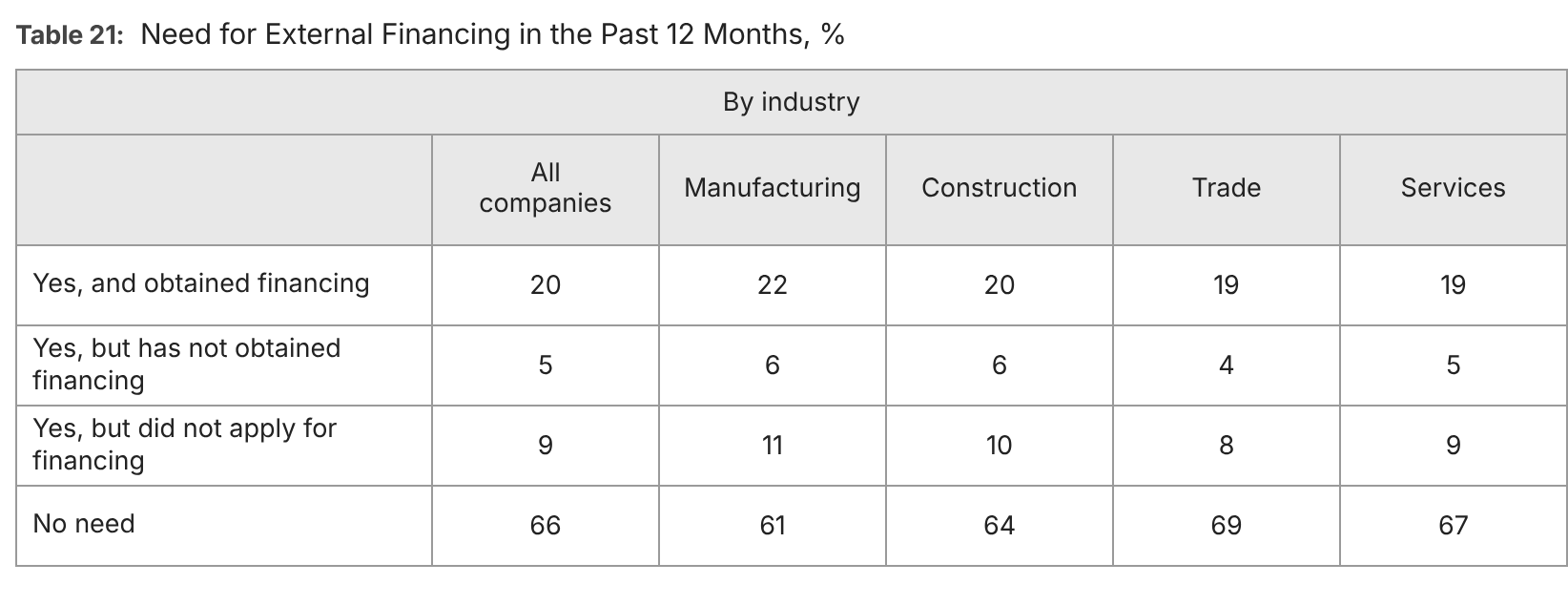
The business cycle expectations of SMEs rose clearly compared with last spring and the previous year. Despite the war in Iran and the resulting rise in the price of oil, economic growth that has continued for several quarters and inflation that has remained low strengthened expectations in the first half of 2026. The balance figure for the business cycle outlook rose by nine points from the spring 2026 barometer and stands at ten. Expectations regarding turnover development have strengthened slowly at the same time as general business cycle expectations have risen from their lows in 2023 and 2024. The balance figure for turnover expectations rose by two points from the spring 2026 barometer and stands at 16.
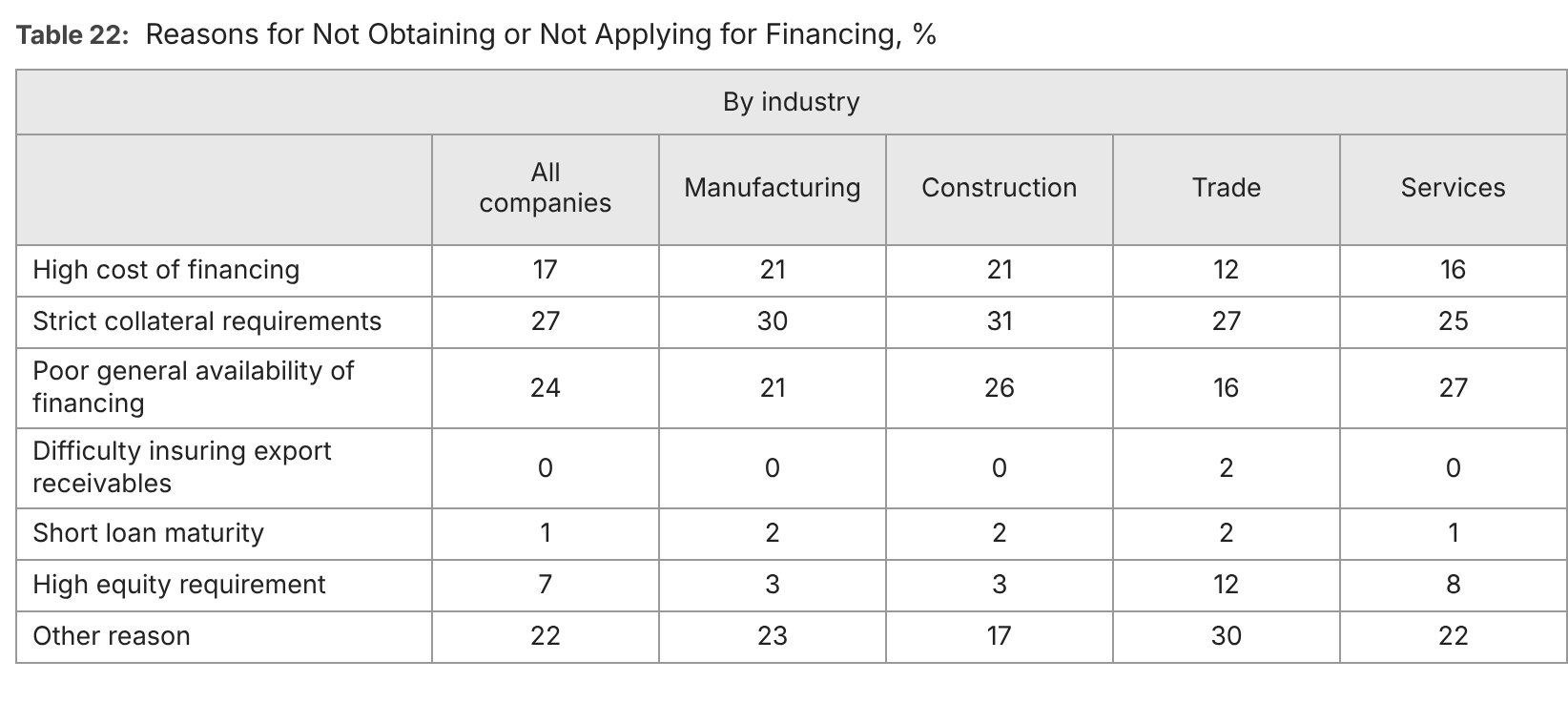
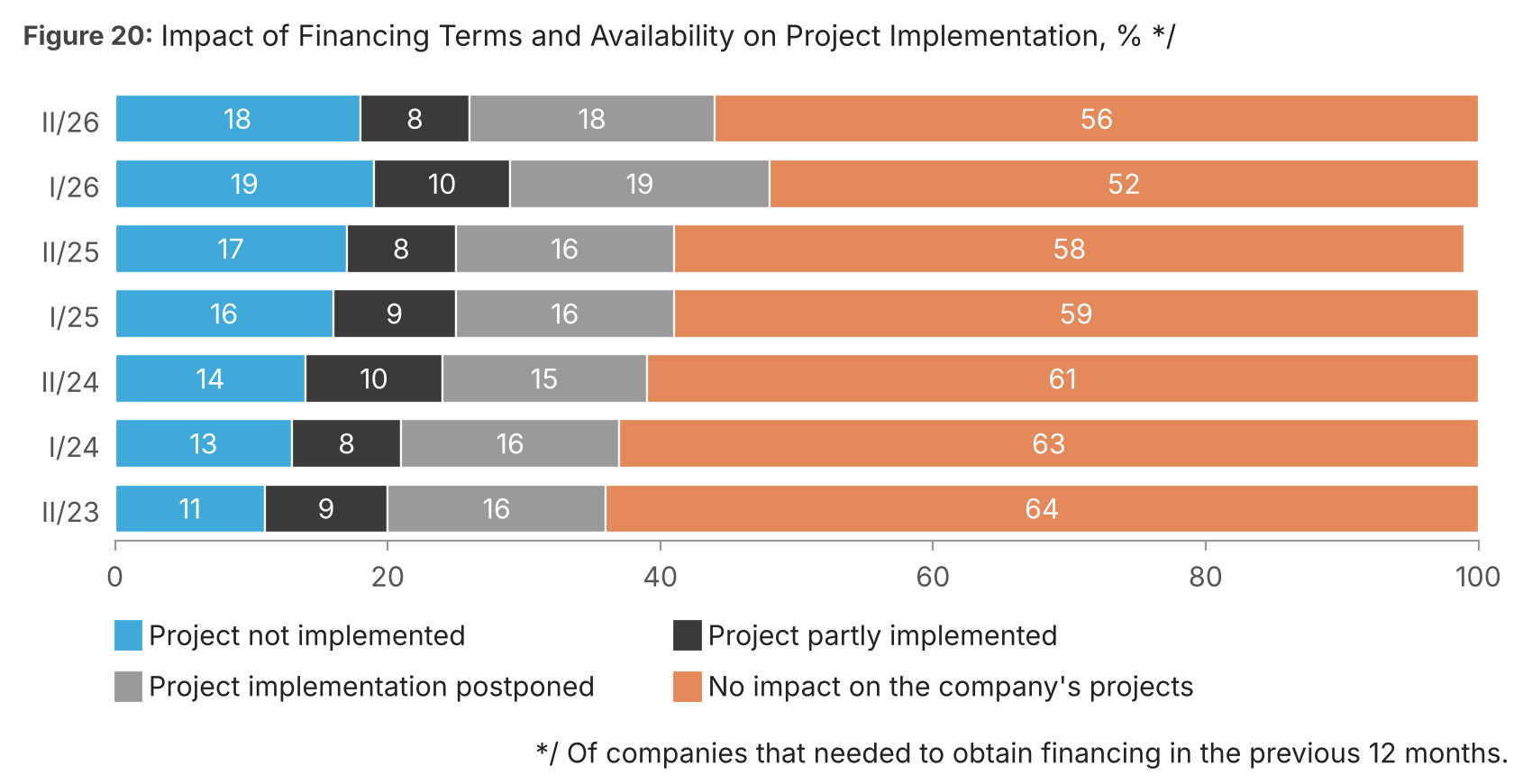
The weakened creditworthiness of companies as a result of the slowly recovering economy and the prolonged recession, combined with banking regulation, is reflected in SMEs’ use of external financing: less than 40% of SMEs have a loan from a bank or other financial institution. The use of external financing has decreased clearly from the spring 2026 barometer. The current year 2026 has been more challenging than expected for many SMEs, and this is reflected in the number of payment difficulties. Around 19%, or slightly less than one in five SMEs, reported difficulties in paying their bills during the past three months. The share rose by three percentage points from the spring 2026 barometer and is at the same level as in the pandemic autumn of 2020.
Pk-yritysbarometri 2/2026 | Suomen Yrittäjät ry
5. ECB: Euro area quarterly balance of payments and international investment position: second quarter of 2026
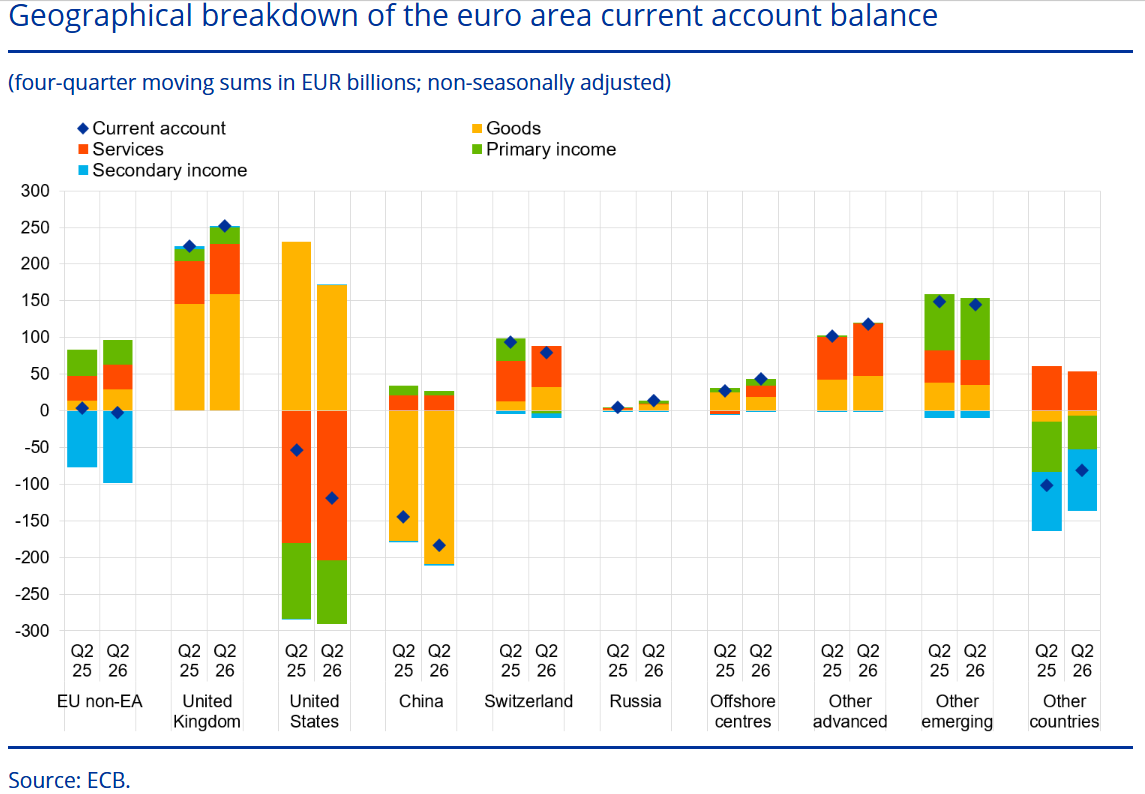
The current account of the euro area recorded a surplus of €265 billion (1.6% of euro area GDP) in the four quarters to the second quarter of 2026, following a €304 billion surplus (1.9% of GDP) a year earlier. This decrease was mainly driven by a lower surplus for goods (from €318 billion to €288 billion) and by a wider deficit for secondary income (from €172 billion to €199 billion).
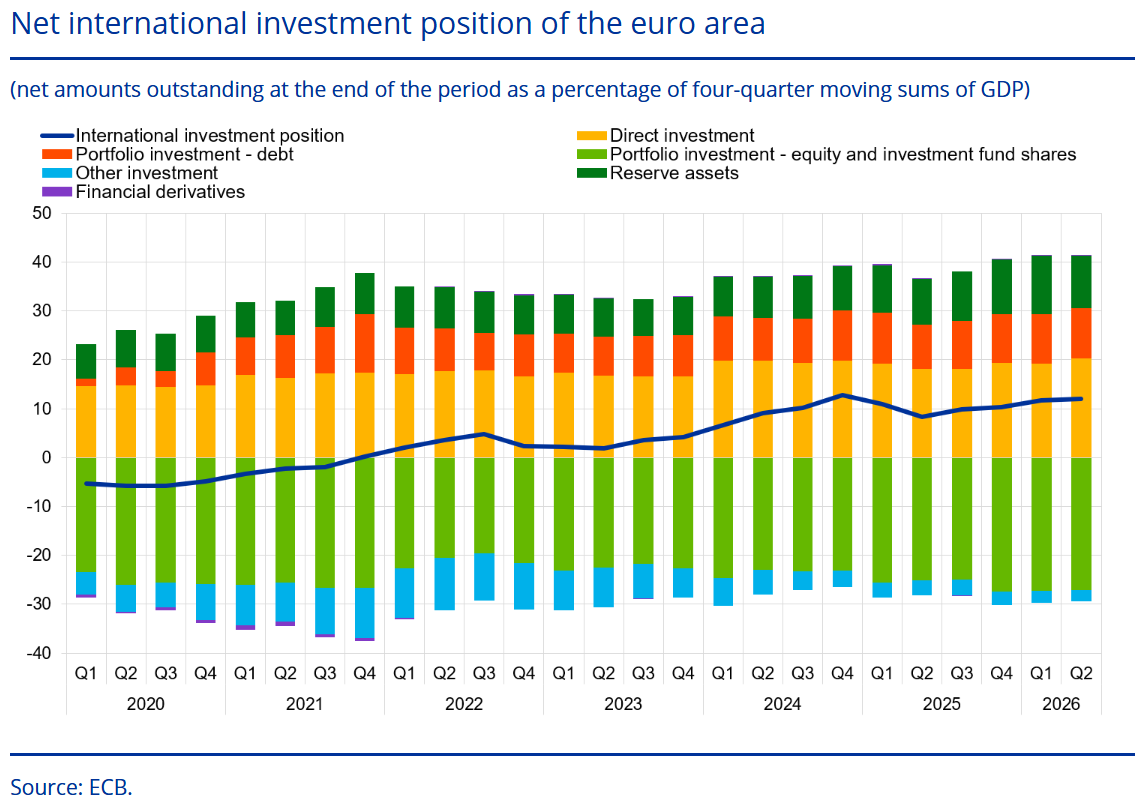
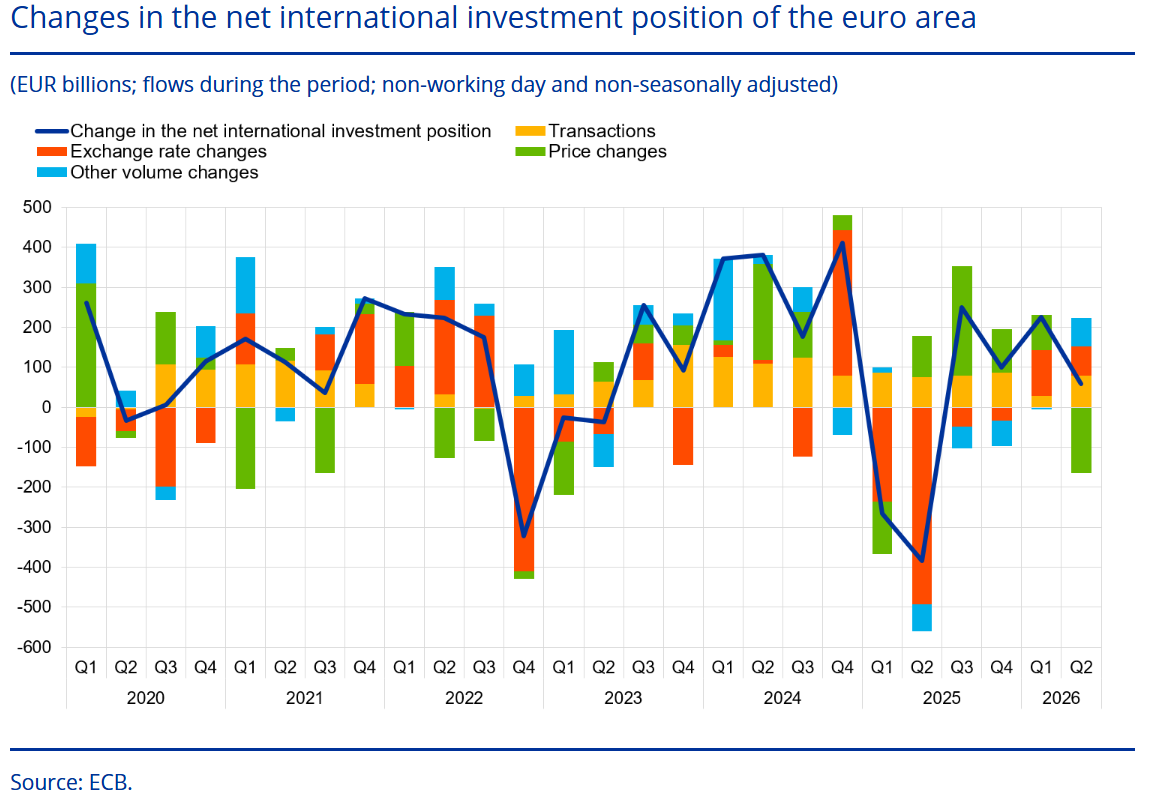
At the end of the second quarter of 2026, the international investment position of the euro area recorded net assets of €1.94 trillion vis-a-vis the rest of the world (12.0% of euro area GDP), up from €1.89 trillion net assets in the previous quarter. The €59 billion increase in net assets was mainly driven by larger net assets in direct investment (up from €3.08 trillion to €3.29 trillion) and lower net liabilities in other investment (down from €0.40 trillion to €0.37 trillion). These developments were partly offset by lower reserve assets (down from €1.91 trillion to €1.76 trillion).
Euro area quarterly balance of payments and international investment position: second quarter of 2026 | European Central Bank
6. Statistics Finland: Current Account Posts Surplus in Q2 2026
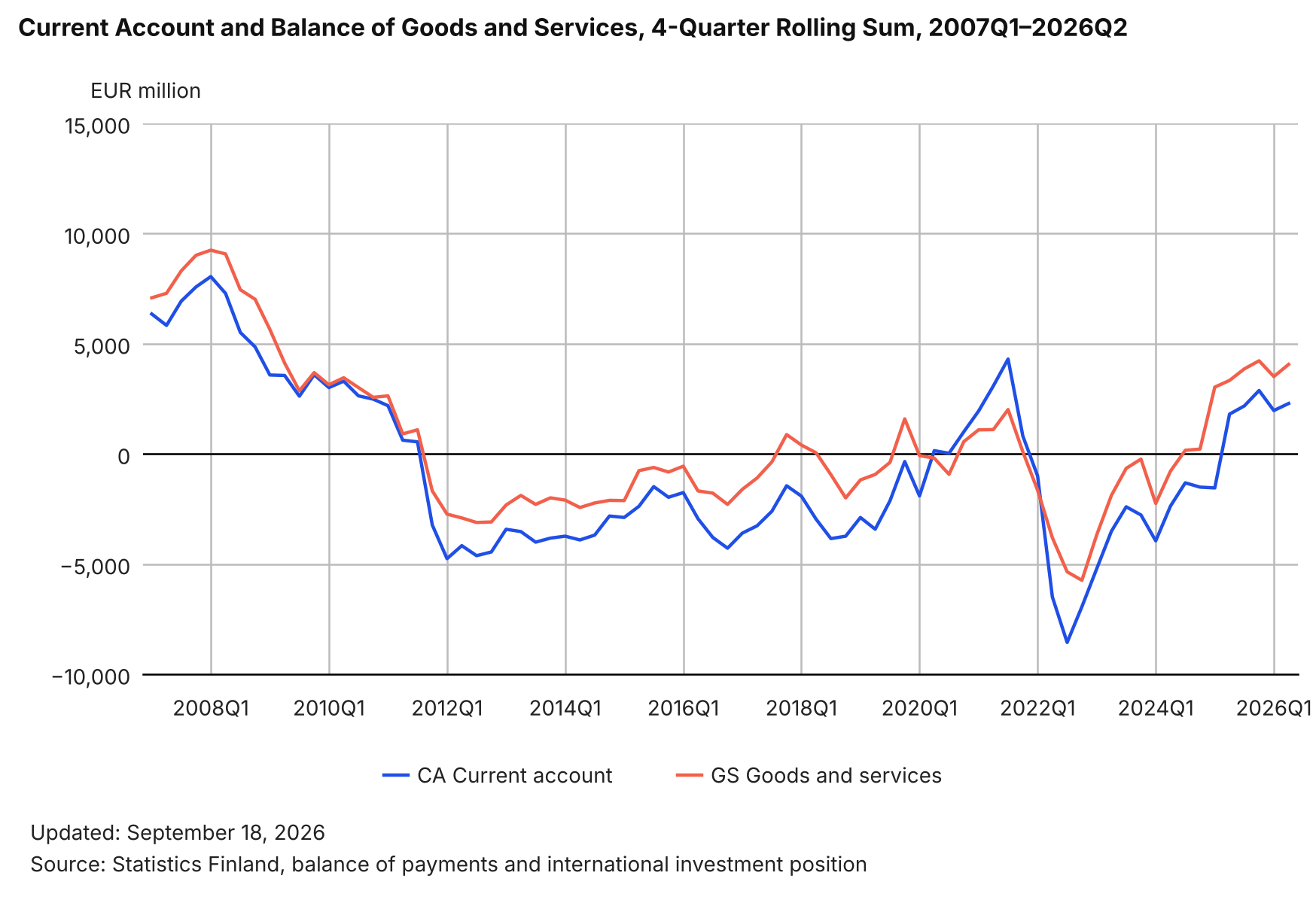
According to Statistics Finland, the current account showed a surplus of EUR 1.3 billion in the second quarter of 2026. The value of exports of goods and services on a balance of payments basis increased by 16% from a year earlier. The value of imports of goods and services, in turn, increased by 15%. The primary income account showed a surplus of EUR 0.1 billion. The net international investment position strengthened compared with the previous quarter.
The balance of goods and services showed a surplus of EUR 1.8 billion. Of the sub-items of the current account, the primary income account showed a surplus of EUR 0.1 billion and the secondary income account showed a deficit of EUR 0.6 billion. The four-quarter moving sum of the current account showed a surplus of EUR 2.3 billion. The capital account showed a surplus of EUR 0.1 billion in the second quarter of 2026.
Vaihtotase oli ylijäämäinen vuoden 2026 toisella neljänneksellä | Tilastokeskus
7. Statistics Finland: Credit Institutions in Finland Post EUR 5.8 Billion in Net Interest Income in 2025
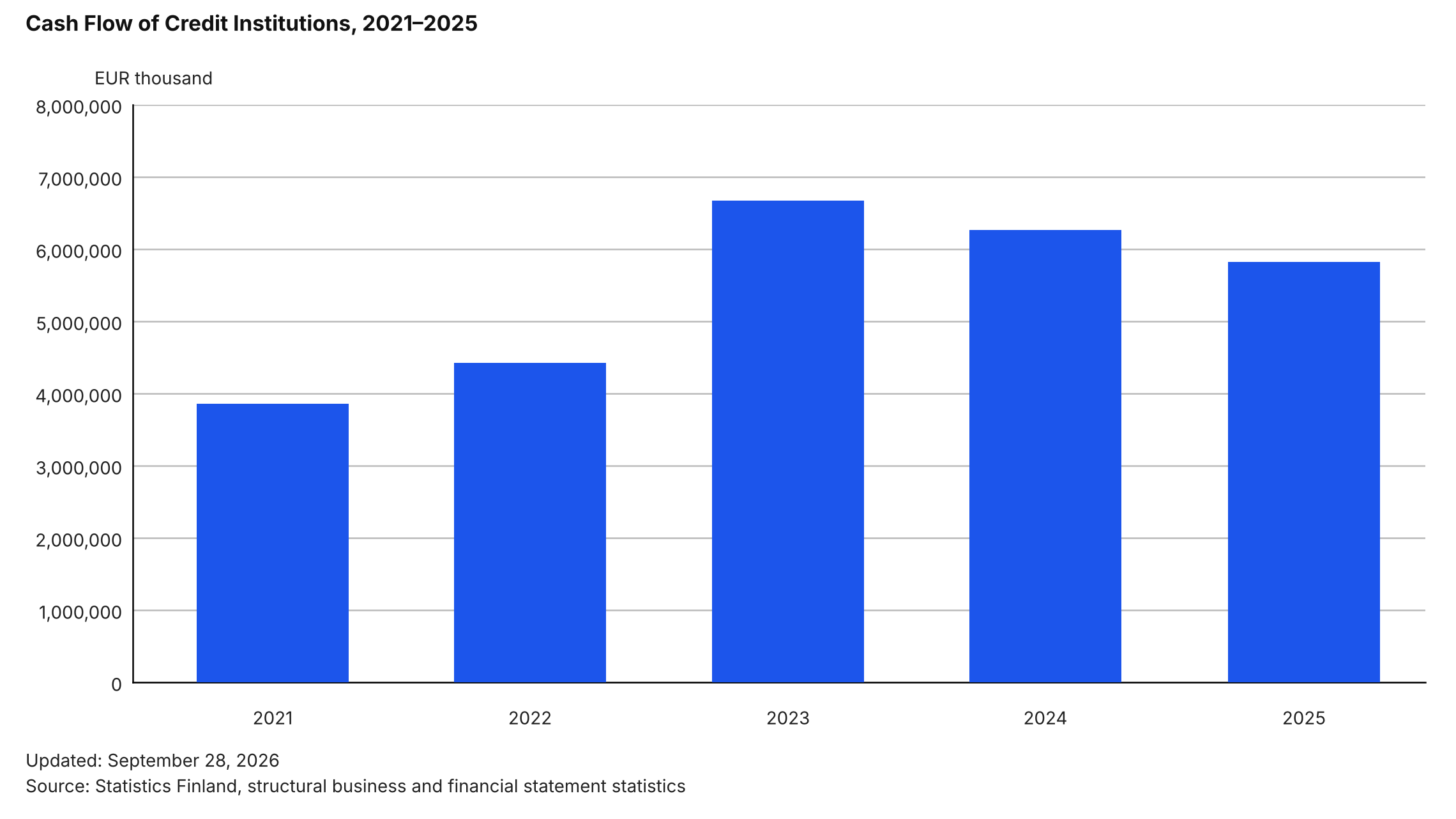
According to Statistics Finland, the interest income of credit institutions operating in Finland decreased by a total of 28.1% in 2025 from 2024, amounting to EUR 18.3 billion. Correspondingly, interest expenses totaled EUR 12.4 billion. The difference between interest income and interest expenses, i.e. net interest income, was EUR 5.8 billion, which was 7.1% less than in 2024.
Suomessa toimivien luottolaitosten rahoituskate oli 5,8 miljardia euroa vuonna 2025 | Tilastokeskus
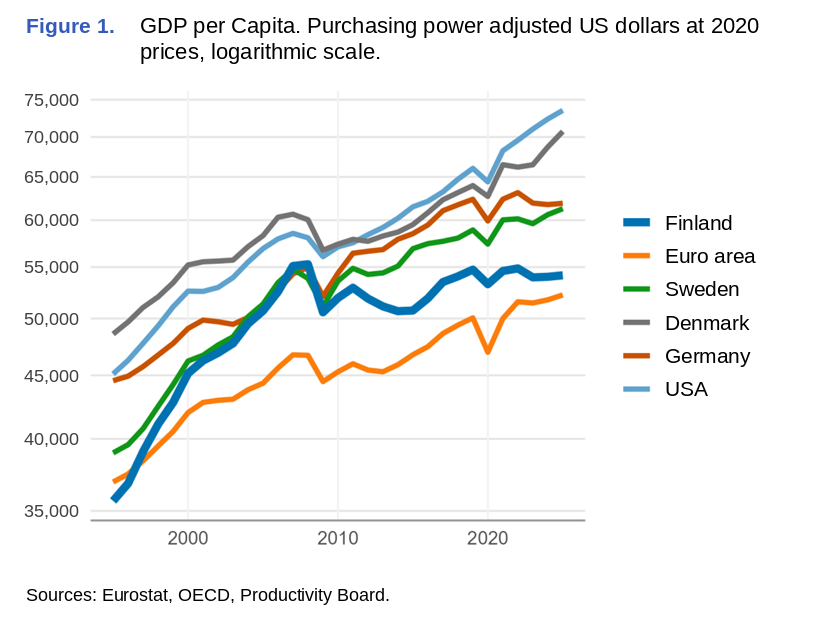
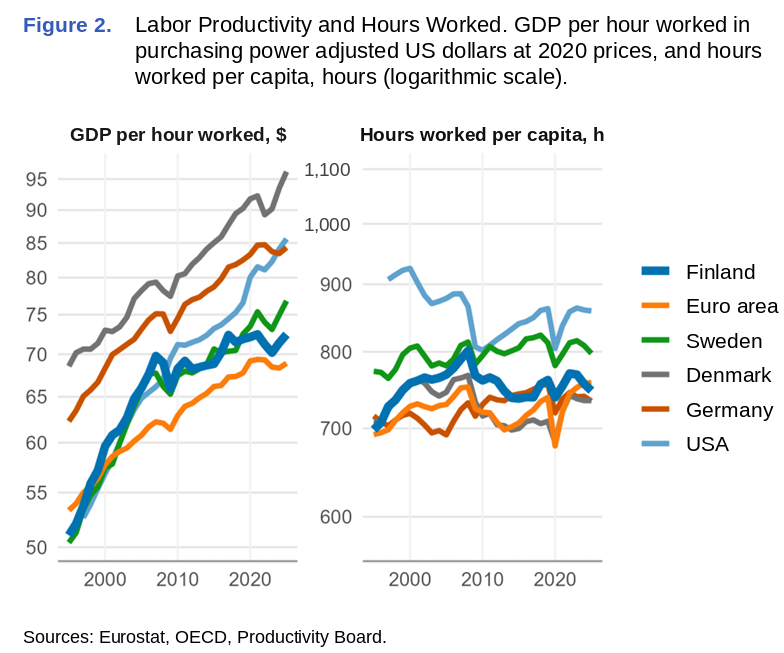
8. Finnish Ministry of Finance: Finnish Productivity Board Annual Report 2026: Productivity of the Service Sector, Renewal of Companies and the State of Competition
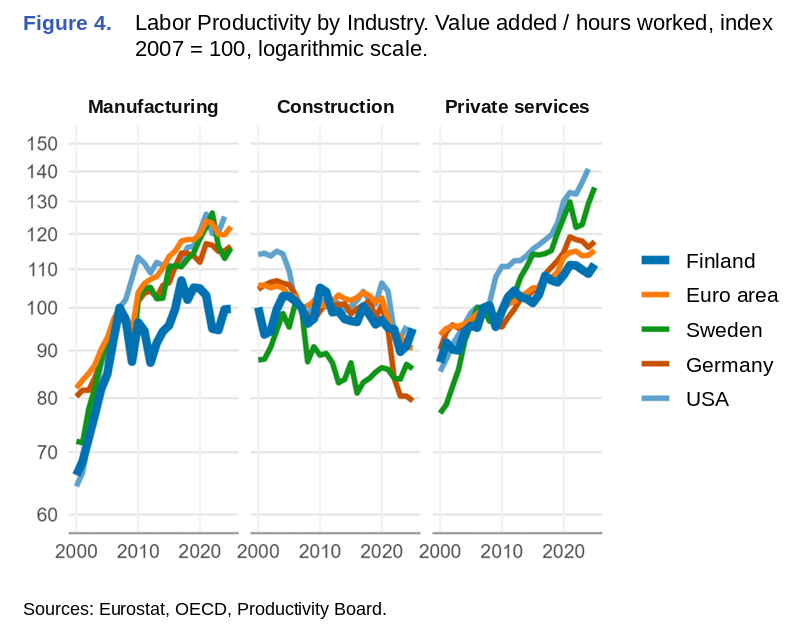
Finland’s economic growth has been clearly slower than in its peer countries, and the problem has been the weak growth of labor productivity. In 2025, the productivity of the business sector was still almost at the same level as nearly 20 years ago. The relative cost competitiveness of the Finnish economy is close to its long-term average. Under conditions of weak productivity growth, cost competitiveness has been maintained by wage developments that have been weaker than in peer countries.
The productivity of private services is weak in relation to peer countries. There is no single reason for this. In Finland, there is less capital in the service industries than in peer countries. Capital and skilled labor are not allocated in the most efficient way. The utilization of digital technology has been concentrated in a small group of companies. There are rapidly growing productive companies in high-tech industries, but they are still mainly small.
The weak picture of Finland’s productivity was slightly improved by the national accounts revision made in June 2026, which raised the estimate of labor productivity in 2024 and 2025. Productivity developments at the beginning of 2026 also look promising.
Tuottavuuslautakunnan vuosiraportti 2026 : Palvelusektorin tuottavuus, yritysten uudistuminen ja kilpailun tila | Valtiovarainministeriö
9. Eurostat: EU labor productivity increased in Q2 2026
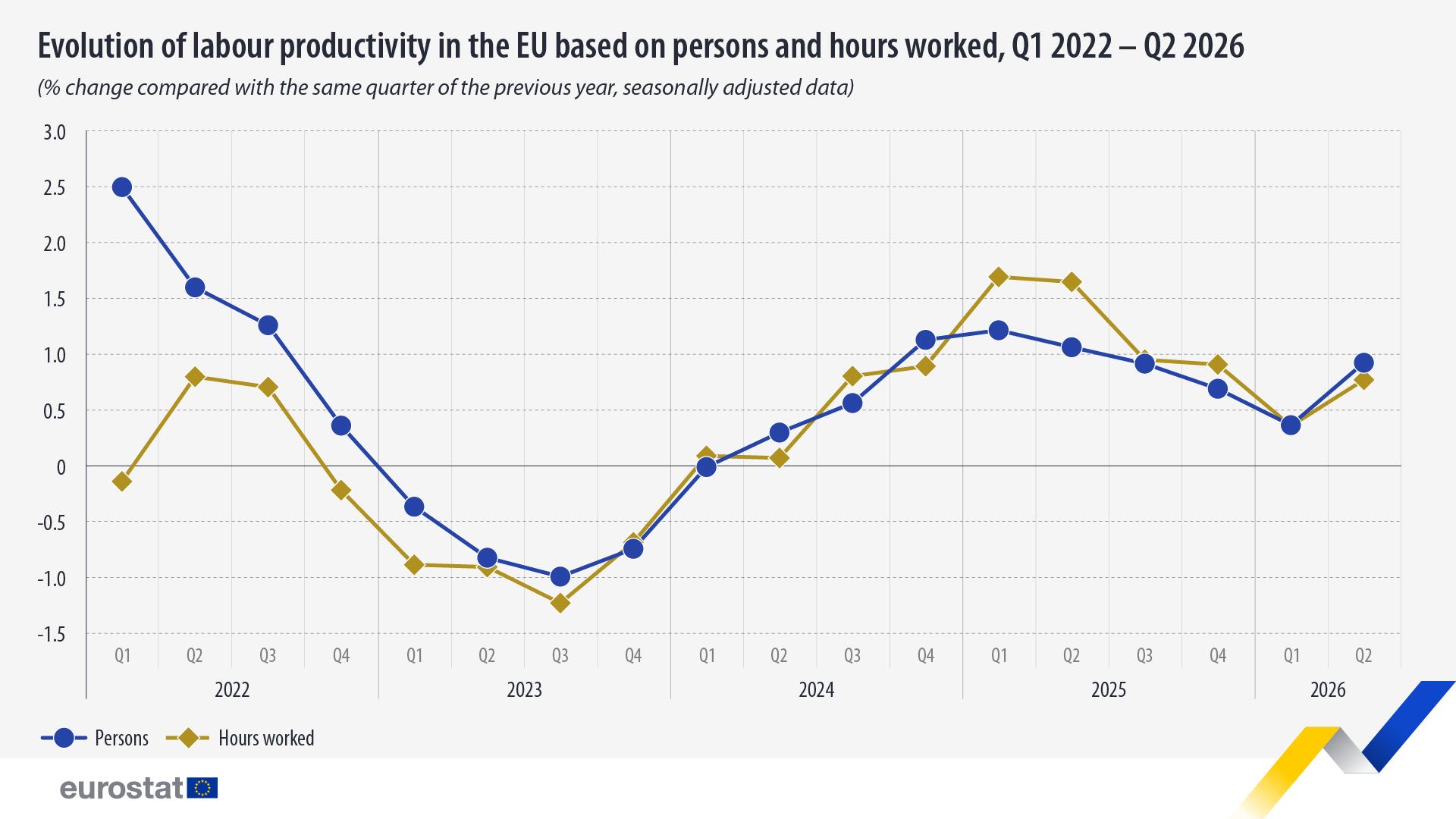
In the second quarter of 2026, labour productivity in the EU increased by 0.9% based on persons and by 0.8% based on hours worked, compared with the same quarter of the previous year. In the first quarter of 2026, labour productivity had increased by 0.4% based on both persons and hours worked compared with the same quarter of the previous year.
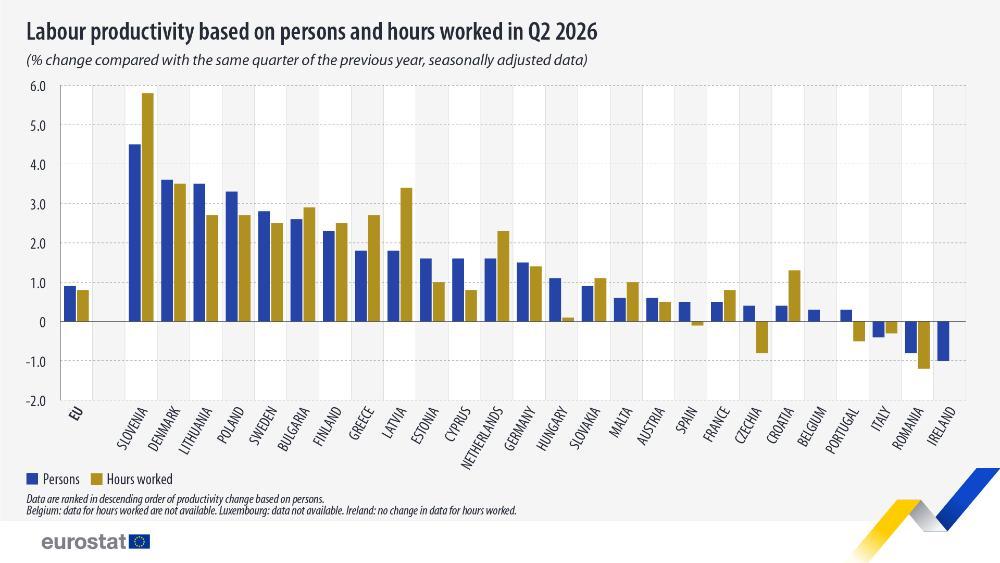
EU labour productivity increased in Q2 2026 – News articles – Eurostat
10. Statistics Finland: Output of the National Economy Grew in August 2026
According to Statistics Finland, working-day adjusted output in August 2026 grew by 2.3% from August of the previous year. Seasonally adjusted output in August grew by 0.3% from the previous month. According to revised data, working-day adjusted output in July grew by 2.7% (previously 1.4%) from July of the previous year.
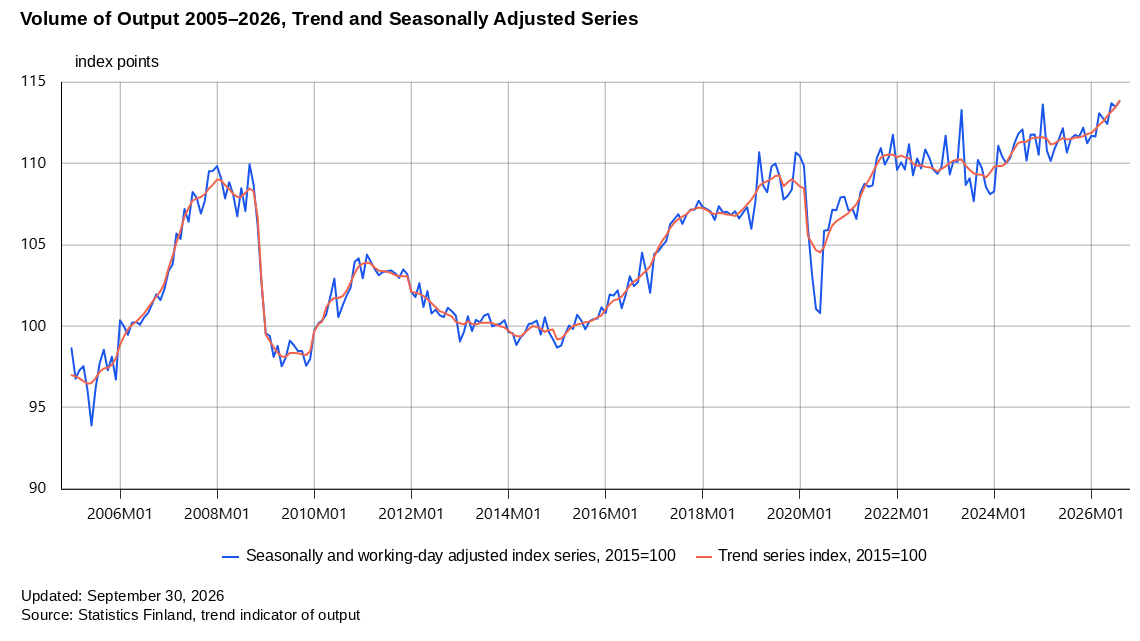
Kansantalouden tuotanto kasvoi elokuussa 2026 | Tilastokeskus
11. ECB: Euro area bank interest rate statistics: August 2026
The composite cost-of-borrowing indicator, which combines interest rates on all loans to corporations, remained broadly unchanged in August 2026. The interest rate on new loans of over €1 million with a floating rate and an initial rate fixation period of up to three months decreased by 14 basis points to 3.34%. The rate on new loans of the same size with an initial rate fixation period of over three months and up to one year fell by 6 basis points to 3.78%. The interest rate on new loans of over €1 million with an initial rate fixation period of over ten years remained broadly unchanged at 3.74%. In the case of new loans of up to €250,000 with a floating rate and an initial rate fixation period of up to three months, the average rate charged rose by 10 basis points to 3.93%, driven by both the interest rate and the weight effects.
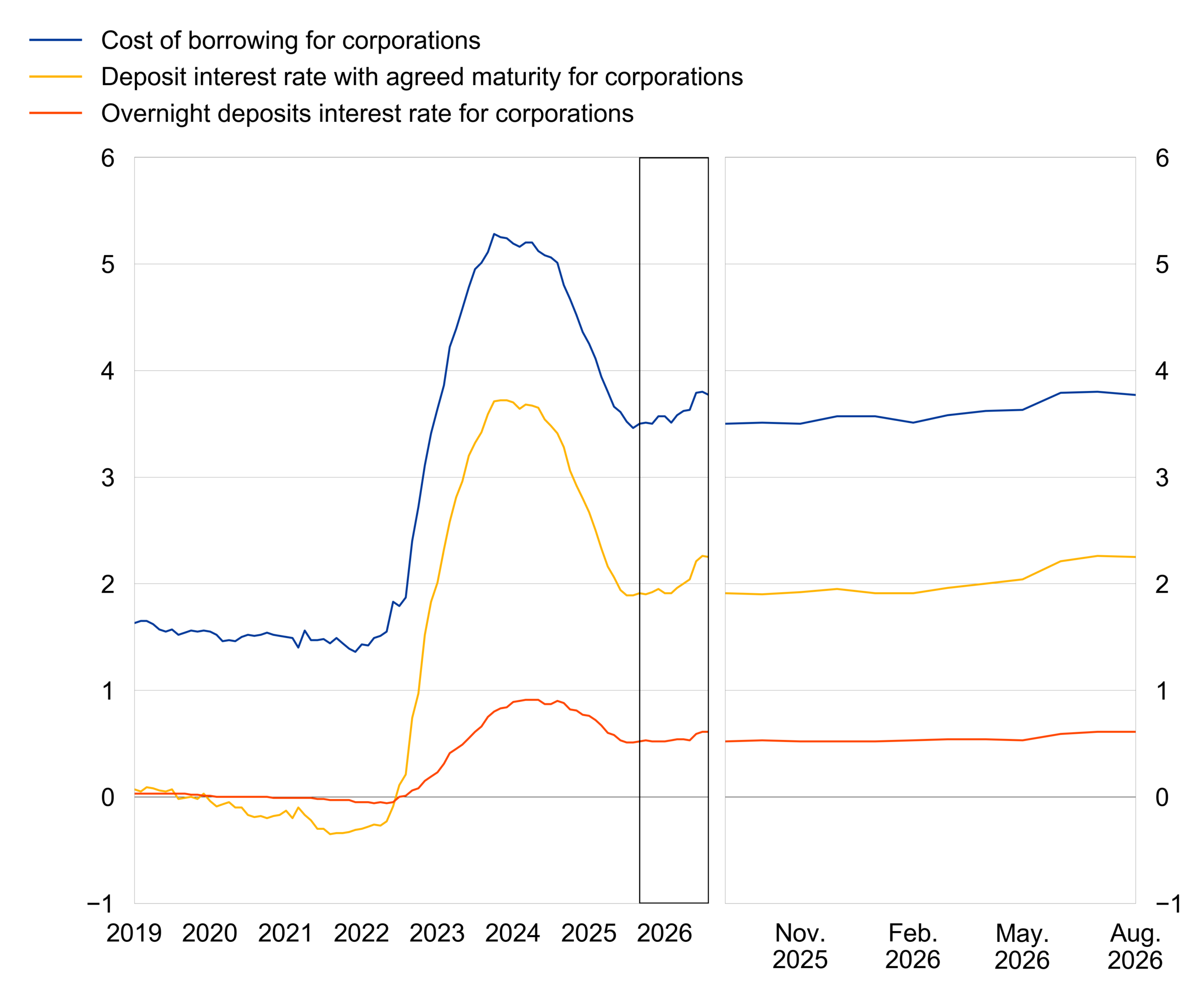
Chart: European Central Bank
Euro area bank interest rate statistics: August 2026
12. Statistics Finland: New Orders in Manufacturing Increased by 67.9% in July 2026 from the Previous Year
According to Statistics Finland, the value of new orders in manufacturing in July 2026 was 67.9% higher than a year earlier. The strong growth is explained by a few large orders in the metal industry. During January–July, the value of new orders received by enterprises was 15.8% higher than a year earlier.
In July 2026, enterprises received more new orders than a year earlier in all of the main industries examined. New orders grew the most in the metal industry, where the value of orders was 93.8% higher than a year earlier. The significant growth in the value of orders in the metal industry was due to large new orders received by the shipbuilding industry. In the chemical industry, the value of orders was 5.7% higher, and in the manufacture of paper and paper and paperboard products 2.2% higher than a year earlier.
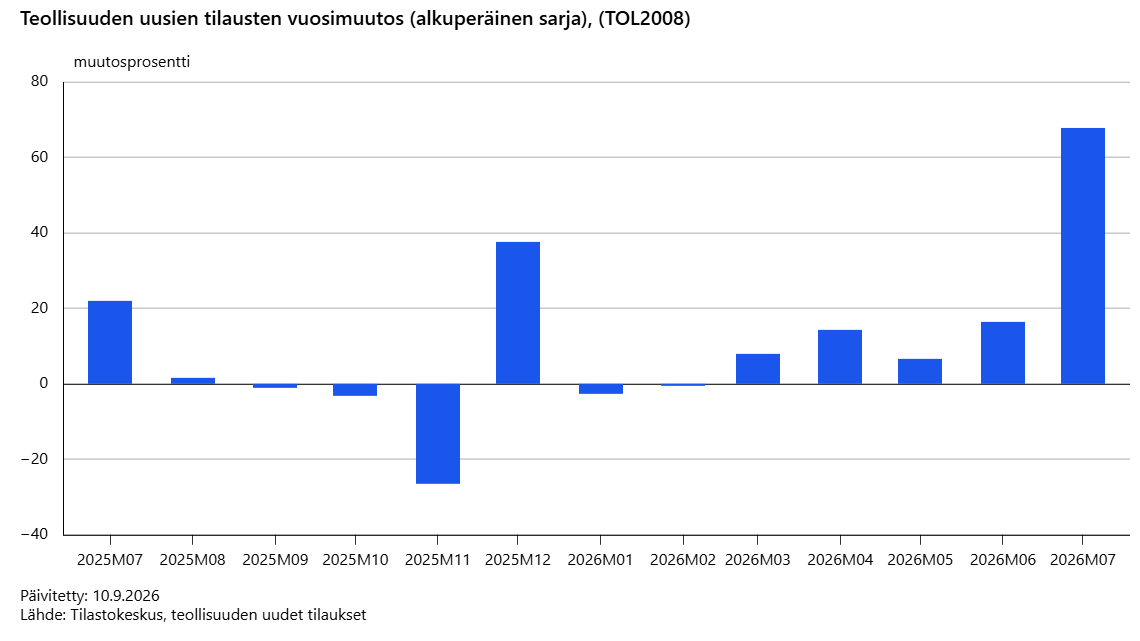
Teollisuuden uudet tilaukset kasvoivat vuoden 2026 heinäkuussa 67,9 % vuodentakaisesta | Tilastokeskus
13. Technology Industries of Finland: Technology Industry Companies Step Up Investment Plans—All Indicators Point to Continued Growth
Companies’ investment intentions have strengthened clearly since the spring in Finland’s largest export sector. The companies that responded to Technology Industries of Finland’s TeknoBaro survey in September 2026 estimate that both fixed and intangible investments will increase this year compared with 2025.
“How do you estimate your investments will develop in 2026 compared with 2025?”
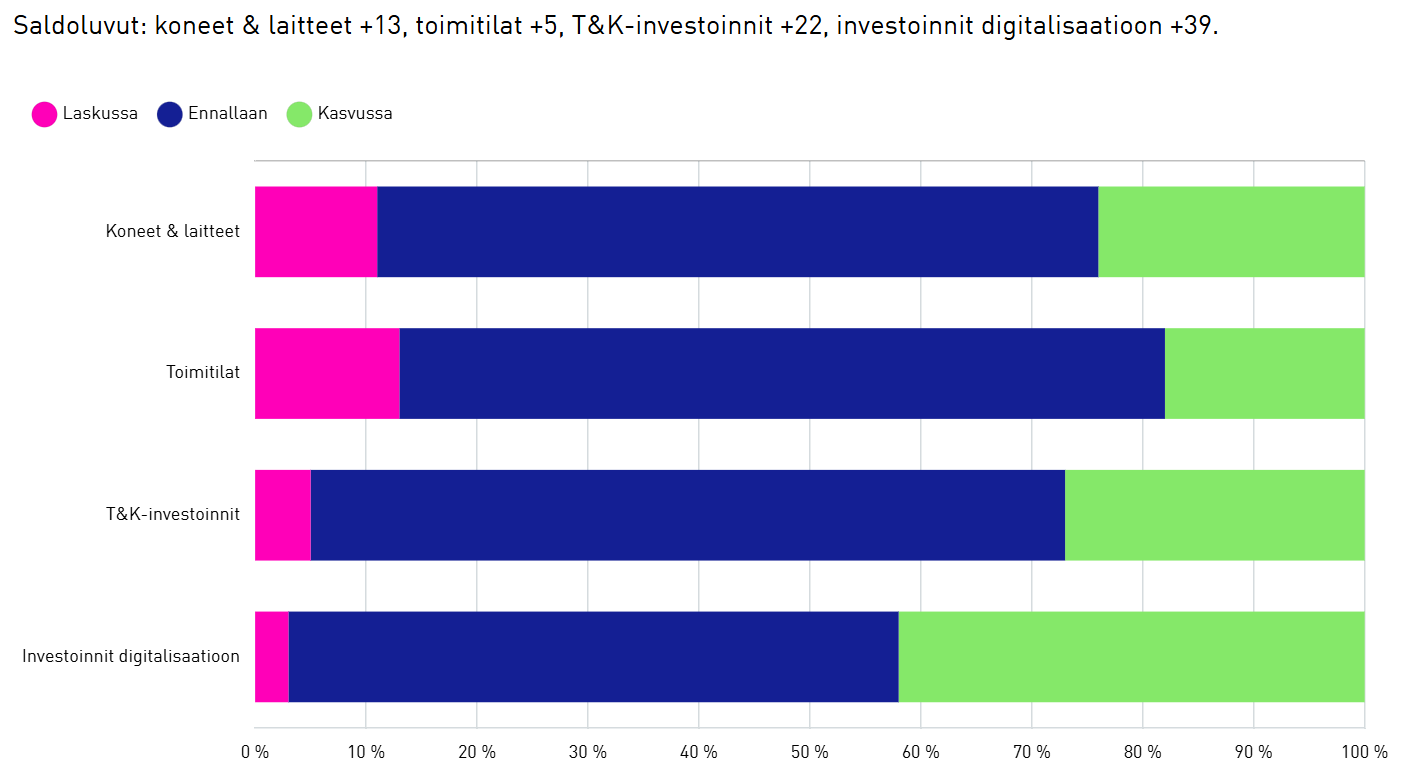
Chart: Technology Industries of Finland
TeknoBaro: Yritysten investointiaikeet teknologiateollisuudessa vahvistuvat – Kaikki mittarit osoittavat kasvun jatkuneen | Teknologiateollisuus ry
14. Finnish Ministry of Finance: Construction Outlook 2026–2027: Fall 2026
The Finnish economy has grown clearly faster than expected in early 2026. The volume of construction also turned to growth at the end of 2025, and many indicators, including the volume of construction turnover, confidence in the sector, the number of building permits and starts, and deliveries of key materials, are growing. The volume of construction is expected to grow clearly in 2026 and 2027.
Commercial construction is the driving force of construction in 2026. The outlook for residential construction is weak, and growth in 2026 will remain small. The recovery will strengthen in 2027, but the volume of residential construction will still be at a low level. The volume of new residential construction is growing slightly in 2026. The construction of subsidized housing started in 2025 is brisk in 2026, although the number of starts is decreasing clearly. Starts of new housing units in 2026 are expected to remain at the low level of recent years.
Residential construction has performed poorly in all the Nordic countries in recent years. In 2025, housing starts turned to growth in the other Nordic countries, but not in Finland.
Rakentaminen 2026-2027 : Syksy 2026 | Teknologiateollisuus ry
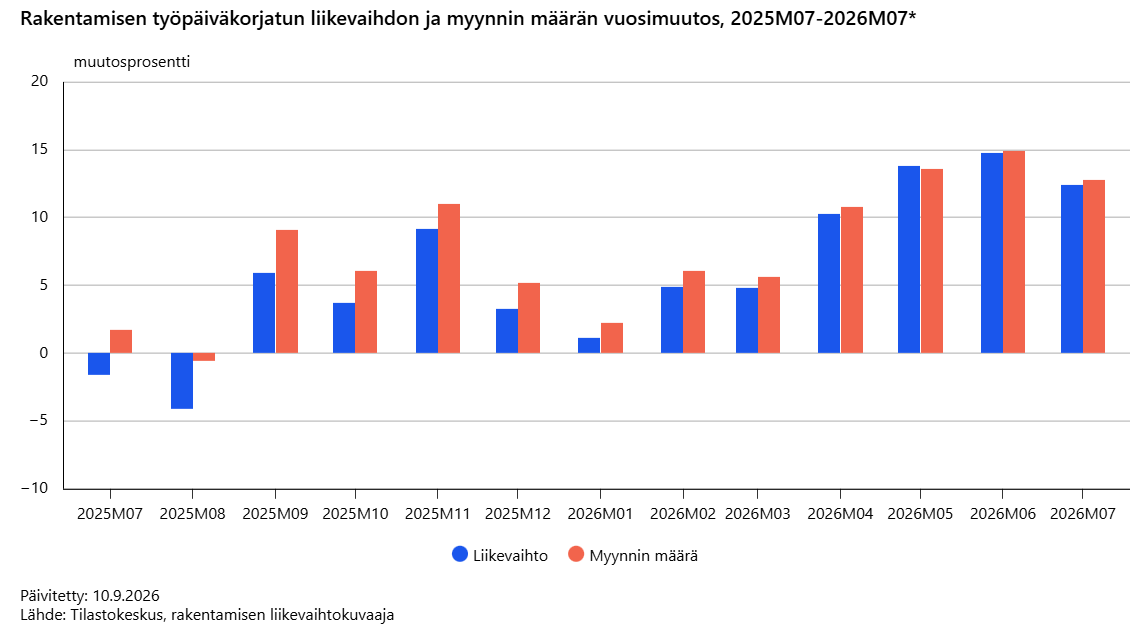
15. Statistics Finland: Construction Turnover Up 12.4% Year on Year in July 2026
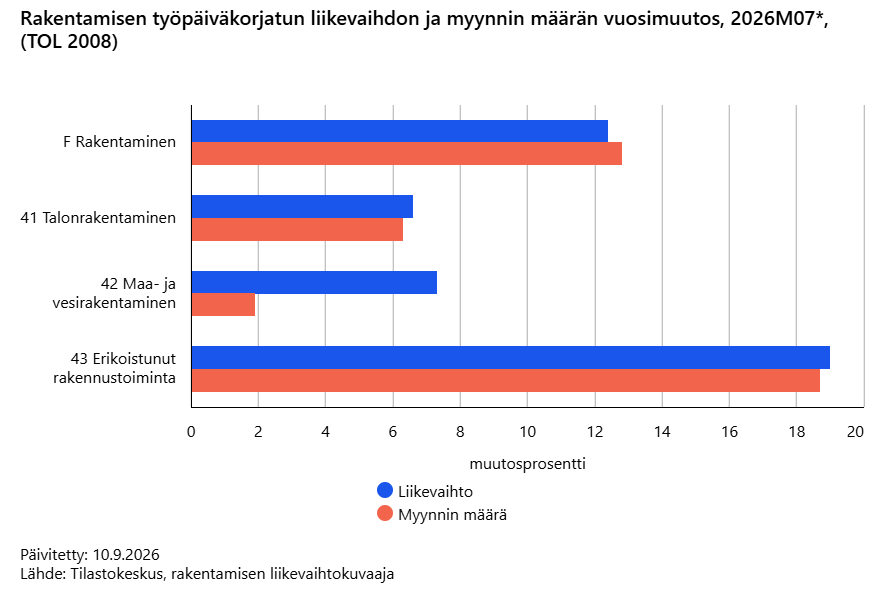
According to Statistics Finland, the working-day adjusted turnover of construction enterprises increased by 12.4% in July 2026 compared with a year earlier. The volume of sales, from which the effect of price changes has been removed, increased by 12.8%.
In July 2026, the working-day adjusted turnover of construction of buildings increased by 6.6% and the volume of sales by 6.3% compared with a year earlier. The working-day adjusted turnover of civil engineering increased by 7.3% and the volume of sales increased by 1.9% from a year earlier. The turnover of specialized construction activities increased by 19.0% and the volume of sales by 18.7% from a year earlier.
Rakentamisen liikevaihto kasvoi vuoden 2026 heinäkuussa 12,4 % vuodentakaisesta | Tilastokeskus
16. Statistics Finland: Building Permit Volume Up 16% Year on Year in July 2026
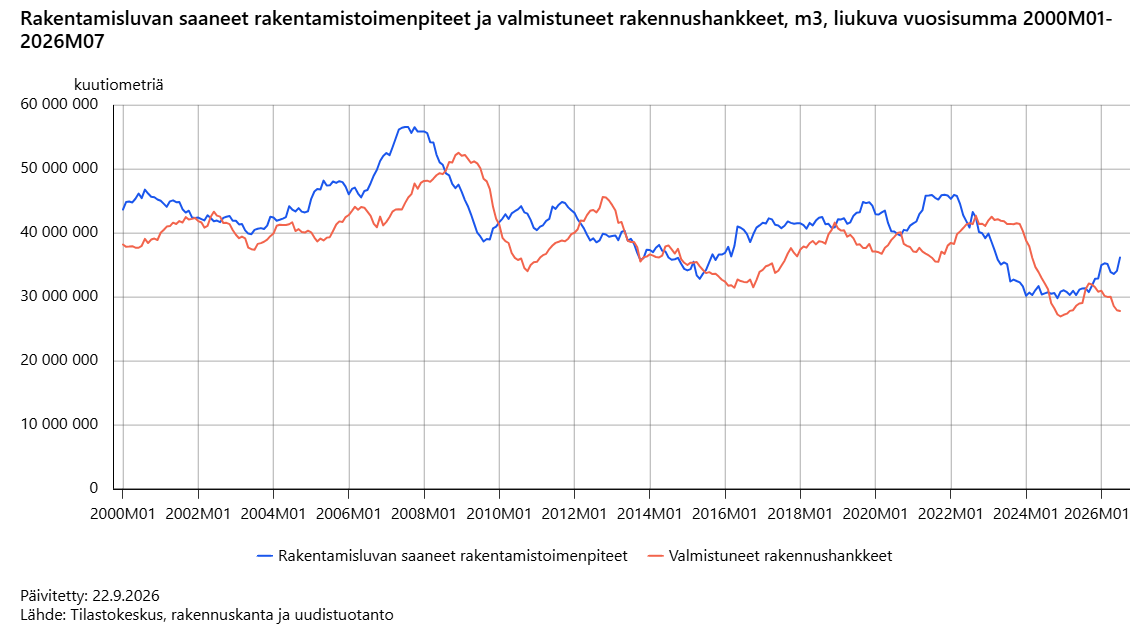
According to Statistics Finland, the annual total of the cubic volume of construction measures granted a building permit for new construction increased by 16% from a year earlier in July 2026. Building permits were granted for 36 million cubic meters between August 2025 and July 2026. Building projects totaling nearly 28 million cubic meters were completed during the period, which was 4% less than a year earlier.
The growth in the cubic volume of granted building permits is mainly due to information and communications technology buildings, which include data centers and equipment facilities, among others. Building permits were granted for 15,537 dwellings, which was 16% fewer than a year earlier. The moving annual total of the cubic volume of started building projects was 7% smaller than a year earlier.
Myönnettyjen rakentamislupien kuutiomäärä kasvoi 16 % vuoden takaisesta heinäkuussa 2026 | Tilastokeskus
17. Statistics Finland: Building Costs Up 3.5% Year on Year in August 2026
According to Statistics Finland, building costs rose by 3.5% in August 2026 from a year earlier. Of the material inputs, costs rose the most over the year in heating, water and sewerage supplies (8.8%) and in concrete, bricks and blocks (6.7%). Costs fell the most over the year in soil materials (−5.3%).
The costs of labor inputs rose by 4.4% in August 2026 from a year earlier. The costs of material inputs rose by 3.0% from a year earlier. The costs of services rose by 3.3% from a year earlier.
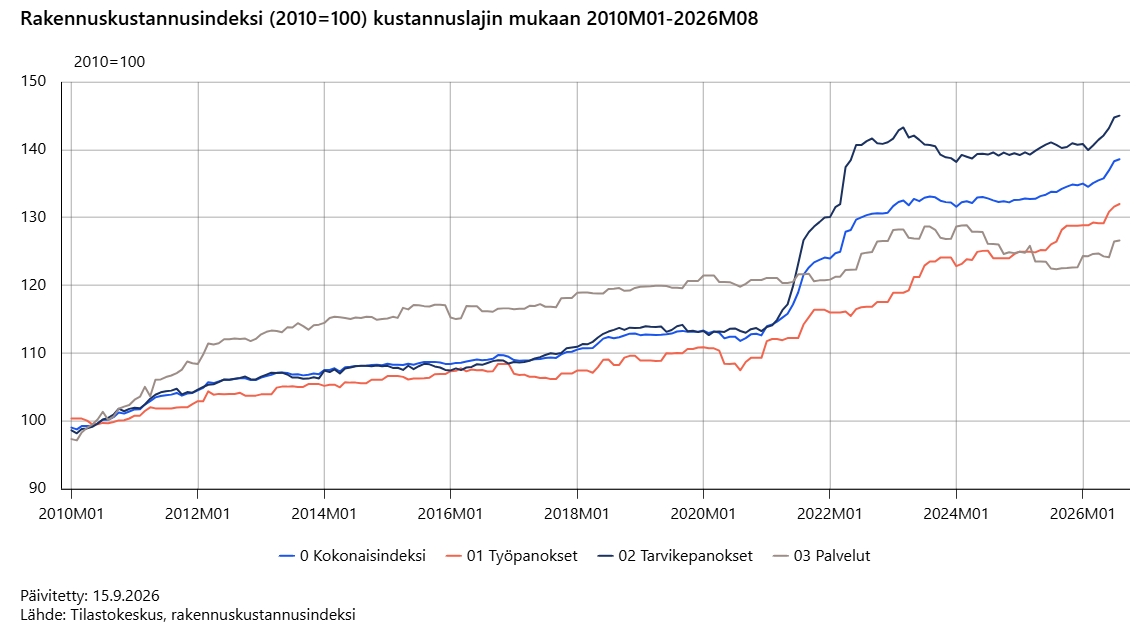
Rakennuskustannukset nousivat 3,5 % elokuussa 2026 vuoden takaisesta | Tilastokeskus
18. Statistics Finland: Number of Overnight Stays in Accommodation Establishments at Previous Year’s Level in August 2026
According to Statistics Finland’s preliminary data, 2.38 million overnight stays were recorded in accommodation establishments in August 2026. Overnight stays by domestic travelers numbered 1.61 million and overnight stays by foreign travelers 0.78 million. The total number of overnight stays was at the previous year’s level. Some of the data for Åland are still missing.
The number of foreign overnight stays increased slightly from the previous year. Most foreign overnight stays were by travelers from Germany, Sweden and the United States. The occupancy rate of hotel rooms was 62% and the average price of a hotel room was EUR 122. On average, the most expensive hotel rooms were in Pirkanmaa, at EUR 147.
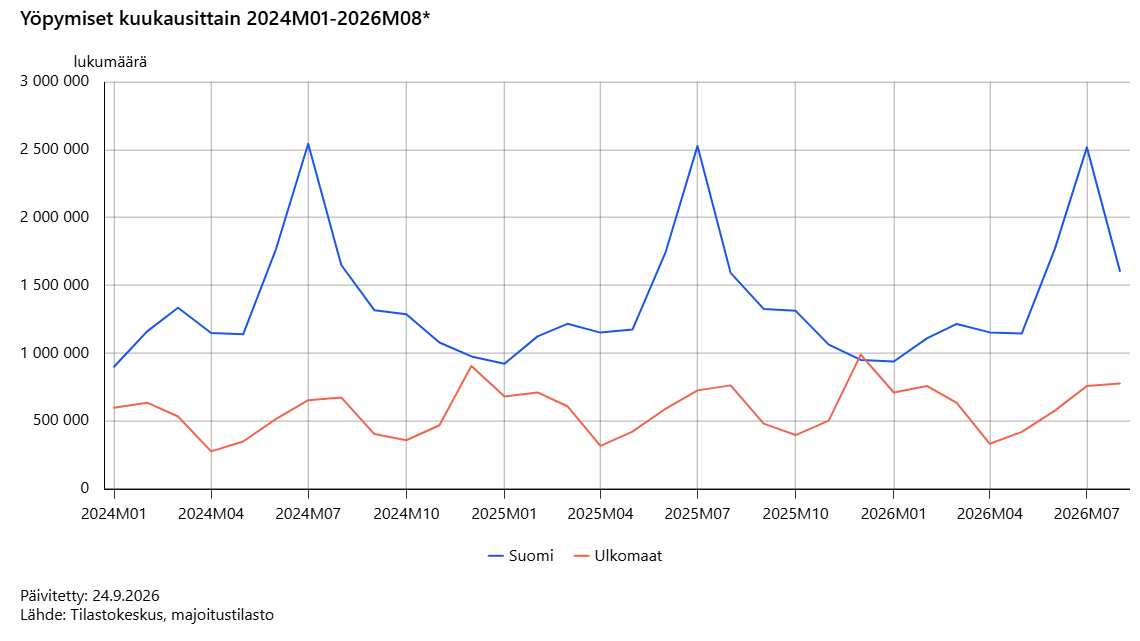
Yöpymisten määrä majoitusliikkeissä edellisvuoden tasolla elokuussa 2026 | Tilastokeskus
19. Statistics Finland: 296 Bankruptcies Were Filed in August 2026
According to Statistics Finland, 296 bankruptcies were filed in August 2026, which is 22 bankruptcies more than in the corresponding period a year earlier. The number of person-years in enterprises subject to bankruptcy petitions totaled 1,458, which is 512 person-years more than in August 2025.
The 12-month moving annual change in bankruptcies filed was 7% in August 2026. Bankruptcy petitions were filed against 25 enterprises in industry, 58 in trade and 40 in construction.
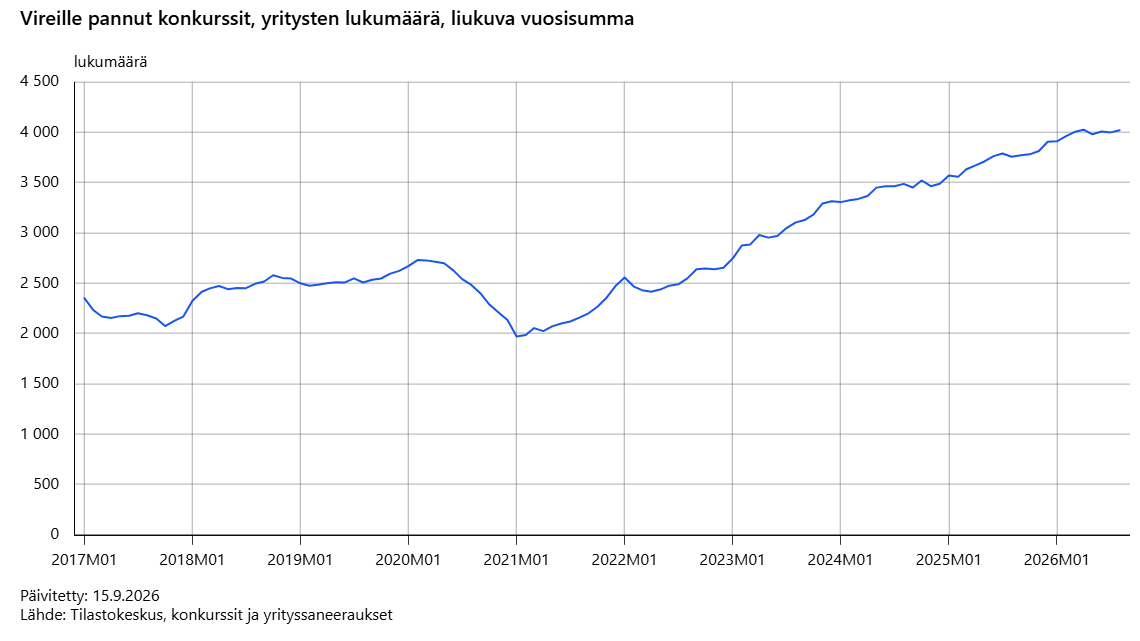
Elokuussa 2026 pantiin vireille 296 konkurssia | Tilastokeskus
20. Statistics Finland: Consumer Confidence Weakened Slightly Again in September 2026
According to Statistics Finland, the balance figure of the consumer confidence indicator was −4.9 in September, compared with −3.0 in August and −5.3 in July. A year earlier in September, the confidence indicator stood at −6.6. The long-term average of the indicator since 1995 is −2.9. The data are based on the Consumer Confidence Survey, to which 1,157 people living in Finland responded between September 1 and 17.
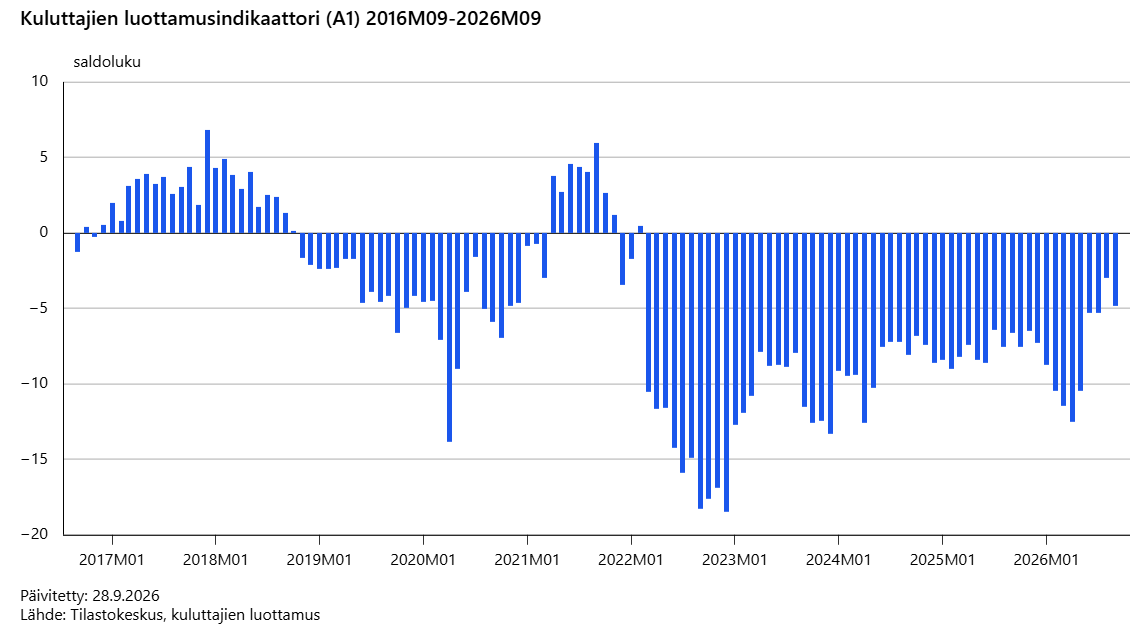
Kuluttajien luottamus heikkeni taas vähän syyskuussa 2026 | Tilastokeskus
21. Fingrid: Power System Status at the End of September
Consumption: 8,441 MW
Import − / export + (net): −2,702 MW
Finland’s area price on the day-ahead market: €197.01/MWh
CO₂ emission estimate for consumed electricity: 31 gCO₂/kWh
Operating situation of the power system: Normal
Sähköjärjestelmän tila | Fingrid (September 30th 2026)
22. Fingrid: Outlook for Electricity Production and Consumption Updated — Growth in Electricity Consumption Is Becoming Concrete
In its new Outlook for Electricity Production and Consumption report, Fingrid estimates that Finland’s electricity consumption will grow clearly over the next decade. Growth will be driven in particular by data centers, the electrification of industry, the production of hydrogen and e-fuels, and electric heating and transport. The report consists of two scenarios in which electricity consumption is expected to grow from the current level of less than 90 terawatt hours to 106–123 terawatt hours by 2030. In 2035, consumption is estimated to be 110–162 terawatt hours.
Finland has good conditions for increasing clean electricity production. The growth is based above all on weather-dependent onshore wind power and solar power. Electricity production is forecast to grow from the current level of around 80 terawatt hours to 107–118 terawatt hours in 2030 and to 128–171 terawatt hours in 2035. The forecast growth in electricity production requires a significant amount of new production investments as early as the 2020s.
Sähkön tuotannon ja kulutuksen kehitysnäkymät päivitetty – sähkönkulutuksen kasvu konkretisoituu | Fingrid
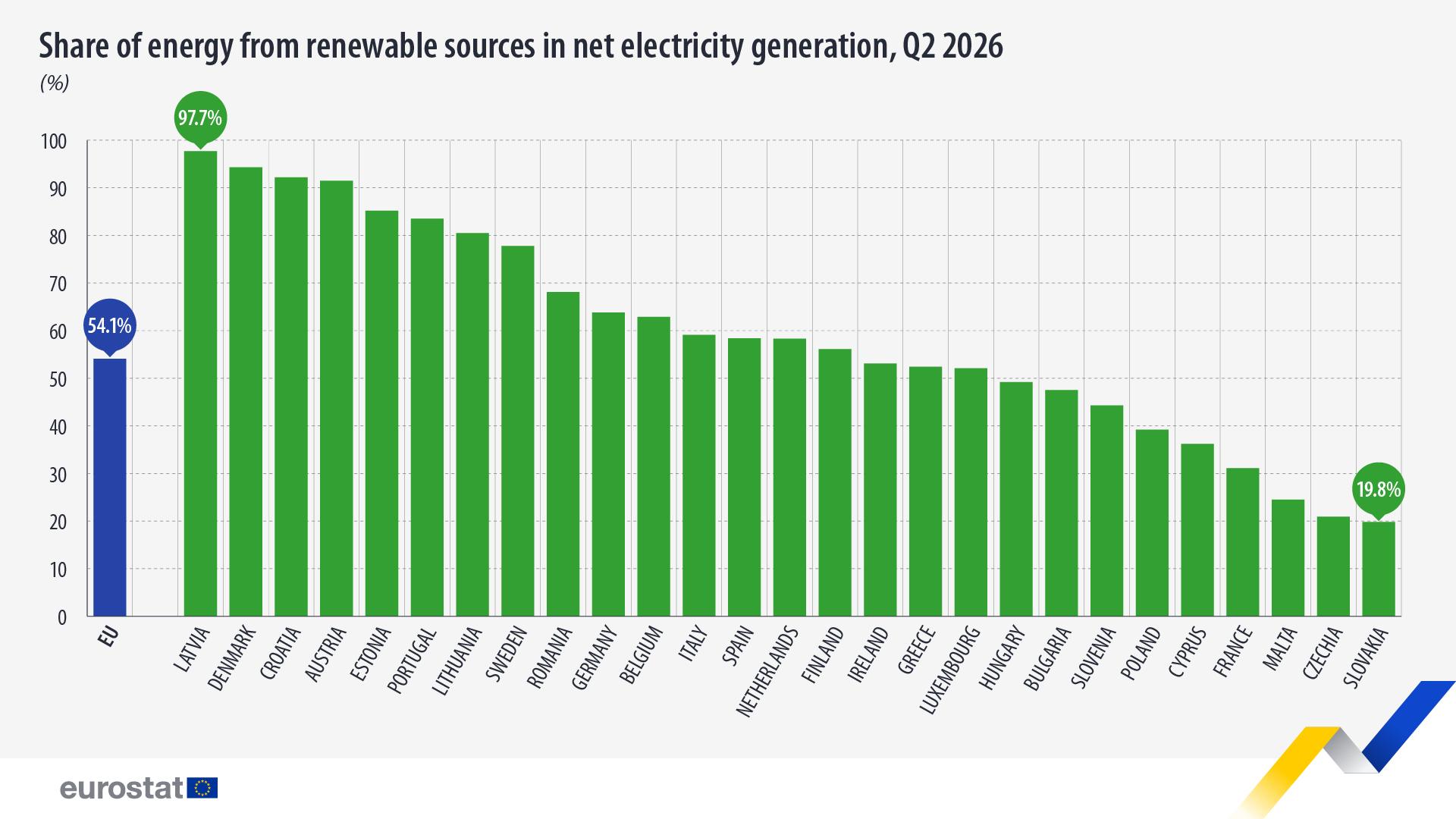
23. Eurostat: 54% of EU’s electricity came from renewables in Q2 2026
In the second quarter of 2026, 54.1% of the electricity generated in the EU came from renewable energy sources, a slight decrease from 54.3% in the same period of 2025.
Solar was the leading source of renewable electricity in the EU (41.6% of the total renewable electricity), increasing its share from 37.0% in the second quarter of 2025. Wind was the second-largest source with 27.7%, followed by hydro power with 22.6%. The remaining renewable electricity came from combustible renewable fuels (7.7%) and geothermal and other energy sources (0.4%).
54% of EU’s electricity came from renewables in Q2 2026 – News articles | Eurostat
24. Ilmarinen: Will Data Center Investments Boost Construction Jobs? Ilmarinen’s Business Cycle Index Shows No Turnaround Yet
The number of employees in the business cycle index fell by 0.6% in August compared with the same time a year earlier, whereas in July the overall development was still slightly positive (+0.1%). Of the industries monitored, there was growth in staffing services (+1.3%) and in administrative and support services (+0.3%). The largest declines were in accommodation and food services (−2.2%), information and communication (−2.0%) and construction (−1.8%).
In construction, the change in the number of employees has varied over the summer. In June, the number of employees in the sector decreased by 1.2% from a year earlier. In July, the decline slowed to 0.5%, but in August it weakened again to 1.8%. Google has just announced that it will invest EUR 13 billion in Finland and build new data centers in different parts of Finland. However, the latest business cycle index shows that the data center boom is not yet reflected in the number of employees in the construction sector.
The regional annual changes in construction in August 2026 were:
Eastern Finland +0.5%
Western Finland −1.2%
Northern Finland −1.7%
Etelä-Suomi −2,5 %
Vetävätkö datakeskusinvestoinnit rakennustyöllisyyden nousuun? | Ilmarinen
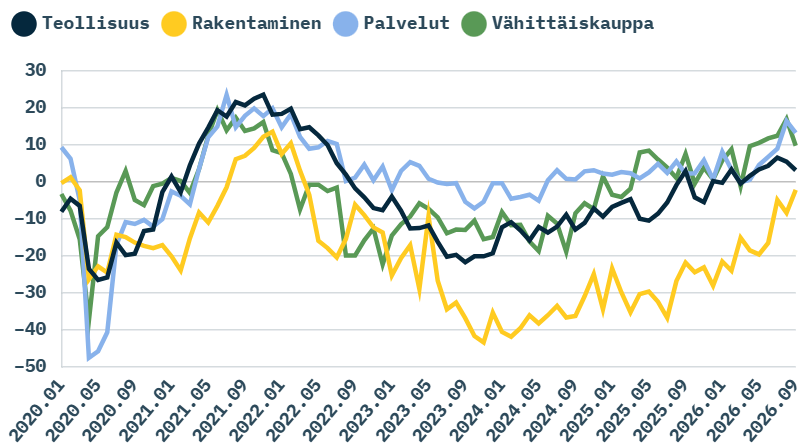
25. Confederation of Finnish Industries: Confidence Indicators Ease Slightly from High Levels
Business confidence in Finland remained strong in the September survey, although some confidence indicators edged down from their peak in August. Confidence in construction, meanwhile, improved from August.